


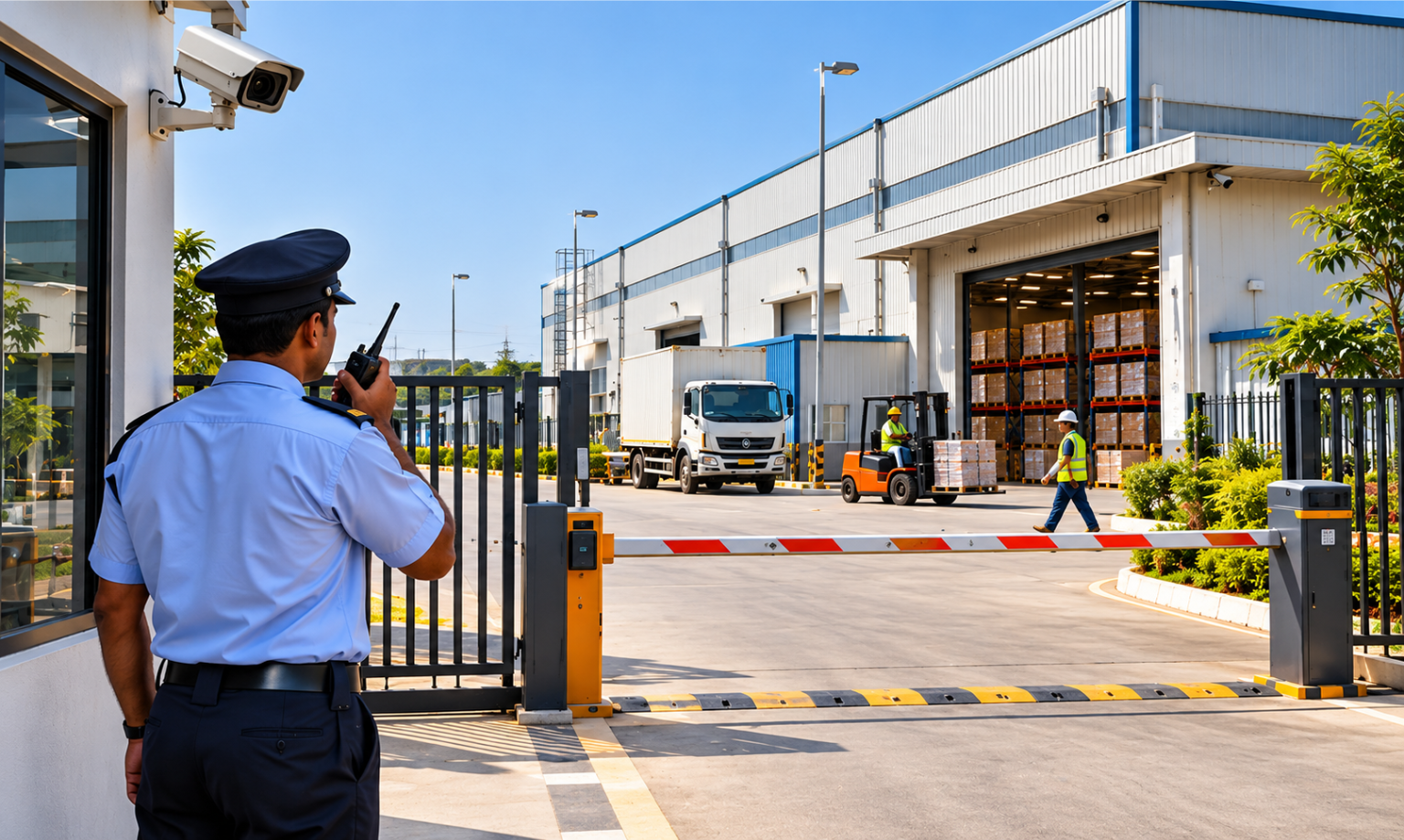
Industrial Security in Bangalore: Key Measures Every Factory & Warehouse Should Follow
Bangalore’s industrial ecosystem includes factories, warehouses, manufacturing units, logistics hubs and large storage facilities handling valuable machinery, raw materials and finished goods. With multiple employees, contractors, vehicles and visitors entering and leaving every day, basic guarding alone may not be enough. Industrial security in Bangalore requires a planned combination of trained personnel, access control, surveillance, perimeter protection and emergency preparedness. Local security providers commonly emphasise gate control, material movement tracking, patrolling and technology-based monitoring as important parts of industrial protection. For businesses, the goal is not simply to prevent theft but also to protect people, maintain operational continuity and respond quickly when something goes wrong.
Why Industrial Security in Bangalore Needs a Layered Approach
Factories and warehouses have different risk points. An open yard may need perimeter patrols, while a warehouse may require tighter control around loading bays and inventory areas.
A strong security plan should cover:
- Unauthorised entry and trespassing
- Theft and inventory pilferage
- Material movement and dispatch fraud
- Vehicle-related risks
- Vandalism and sabotage
- Fire and emergency situations
- Restricted production or storage areas
Modern industrial security increasingly combines physical guards with CCTV, access control, vehicle monitoring and digital reporting rather than relying on one security measure alone.
Key Measures for Industrial Security in Bangalore
1. Control Entry and Exit Points
The main gate is the first layer of protection. Security personnel should verify employee IDs, visitor details, contractor credentials and vehicle information before allowing entry.
Factories can also maintain separate procedures for:
- Employees
- Visitors
- Contractors
- Delivery vehicles
- Outgoing material
- Emergency access
Vehicle and material registers should be maintained accurately so that movements can be checked later if required.
2. Install Strategic CCTV Surveillance
CCTV should cover important areas rather than simply being installed wherever convenient. Entry gates, loading zones, storage areas, parking spaces, production sections and vulnerable perimeter points deserve particular attention.
For larger industrial sites, PTZ, long-range or specialised cameras may be appropriate depending on the environment. Surveillance planning should also consider dust, heat, outdoor exposure and lighting conditions.
3. Strengthen Perimeter Security
A large factory or warehouse can have several vulnerable boundary points. Regular patrols can help identify damaged fencing, unusual movement or attempted intrusion.
Security teams should establish defined patrol routes and schedules, particularly for night shifts. Digital patrol systems can also improve accountability by recording whether designated checkpoints were actually visited.
4. Monitor Material Movement Carefully
Factories and warehouses handle continuous movement of raw materials, components, scrap and finished products. Every inward and outward movement should follow a documented procedure.
Security personnel should verify:
- Gate pass or authorised document
- Vehicle details
- Material description and quantity
- Relevant approvals
- Dispatch or receiving records
This creates a clear trail and can help identify discrepancies quickly.
5. Restrict Sensitive Areas
Not every employee or visitor needs access to every part of an industrial facility. Production control rooms, server rooms, stores, machinery areas and high-value inventory zones may require additional restrictions.
Access can be managed through ID cards, biometrics, electronic locks or other suitable systems. A well-designed access-control system can also create useful records of who entered particular areas and when.
6. Prepare for Fire and Other Emergencies
Security and safety should work together. Guards should know evacuation routes, emergency contacts, assembly points and basic emergency procedures.
Factories and warehouses should also regularly inspect firefighting equipment and conduct appropriate drills. Indian warehousing guidance highlights fire safety, CCTV surveillance, security SOPs and mock drills as important elements of warehouse protection.
Security Measures: Factory vs Warehouse
Area | Factory | Warehouse |
Entry control | Employees, contractors and visitors | Staff, drivers and delivery personnel |
Main concern | People, machinery and production | Inventory and dispatch |
CCTV focus | Production and restricted zones | Storage and loading areas |
Patrols | Perimeter and plant areas | Yard, docks and storage areas |
Material checks | Raw materials, scrap and finished goods | Inward/outward inventory |
Choose Trained Security Personnel
Technology cannot replace trained human judgement. Guards should understand the site’s layout, emergency procedures, visitor protocols, material movement rules and escalation process.
For industrial facilities, businesses should also assess the security agency’s training, supervision, licensing and ability to provide consistent shift coverage. Bangalore-based industrial security providers commonly offer combinations of trained guards, access control, surveillance and patrol services.
Build a Clear Security SOP
Every facility should have written procedures for common situations such as:
- Unauthorised entry
- Missing inventory
- Suspicious vehicles
- Fire alarms
- Workplace incidents
- Security breaches
- Emergency evacuation
Regular reviews and mock drills can help employees and security teams respond more confidently instead of making decisions under pressure.
Conclusion
Effective industrial security in Bangalore is about creating multiple layers of protection around people, property, inventory and operations. Strong access control, CCTV surveillance, perimeter patrols, material verification, restricted-area management and emergency preparedness can significantly improve the security of factories and warehouses.
For businesses looking for dependable protection, Gardozo can help develop a security approach suited to the facility’s size, operations and risk profile. A properly planned security system can provide greater control, quicker response and better peace of mind.
FAQs
1. What is industrial security?
Industrial security protects factories, warehouses, machinery, employees, inventory and operations against risks such as theft, unauthorised access, vandalism, emergencies and operational disruptions.
2. Why is CCTV important for factories?
CCTV provides continuous visibility of important areas such as gates, production sections, storage spaces and loading zones. It can also provide useful records when investigating incidents.
3. Do warehouses need security guards?
Yes. Security guards can control entry, verify vehicles and documents, monitor premises, conduct patrols and respond to incidents that automated systems may not handle independently.
4. How can factories prevent unauthorised entry?
Factories can combine ID verification, visitor registration, access-control systems, security guards, CCTV and restricted-area permissions to control who enters different parts of the facility.
5. What should warehouse security focus on?
Warehouse security should focus on entry control, inventory protection, loading and unloading areas, vehicle movement, CCTV monitoring, perimeter security and accurate material documentation.

Author